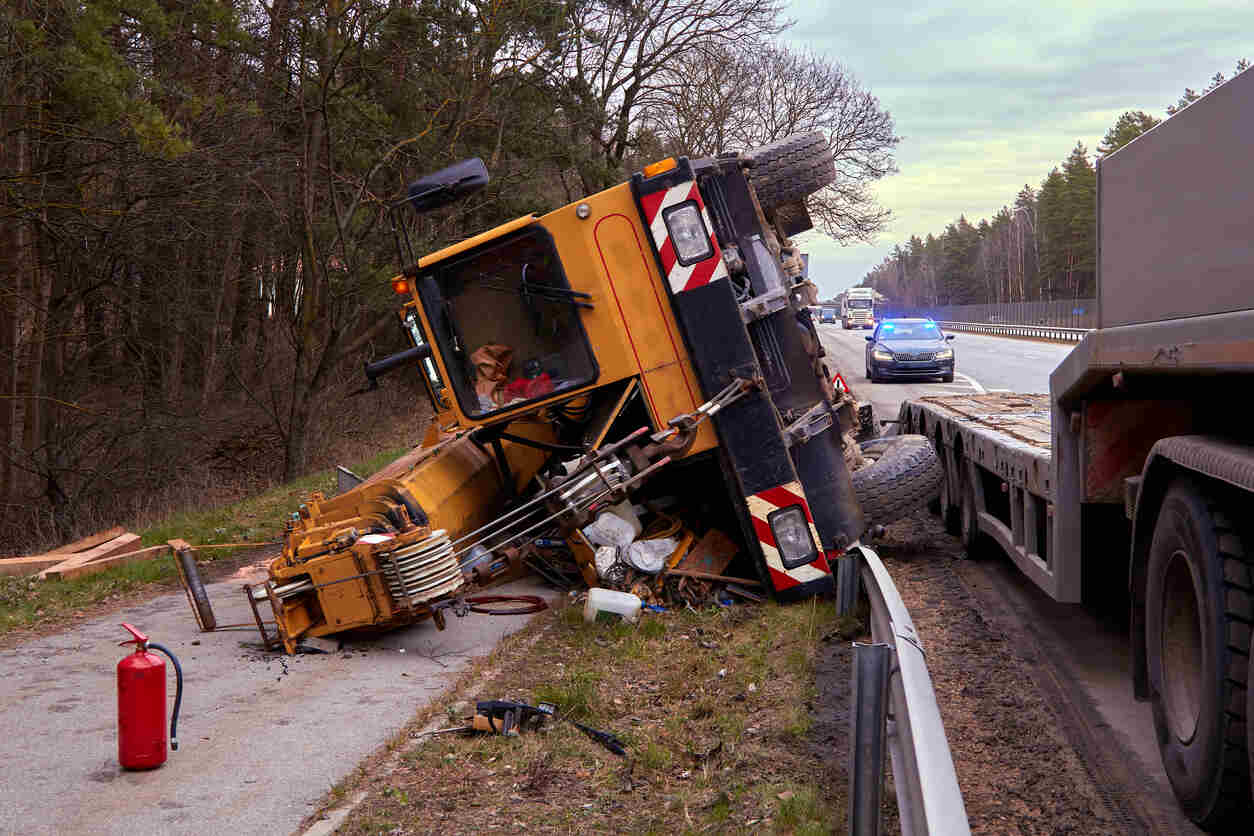
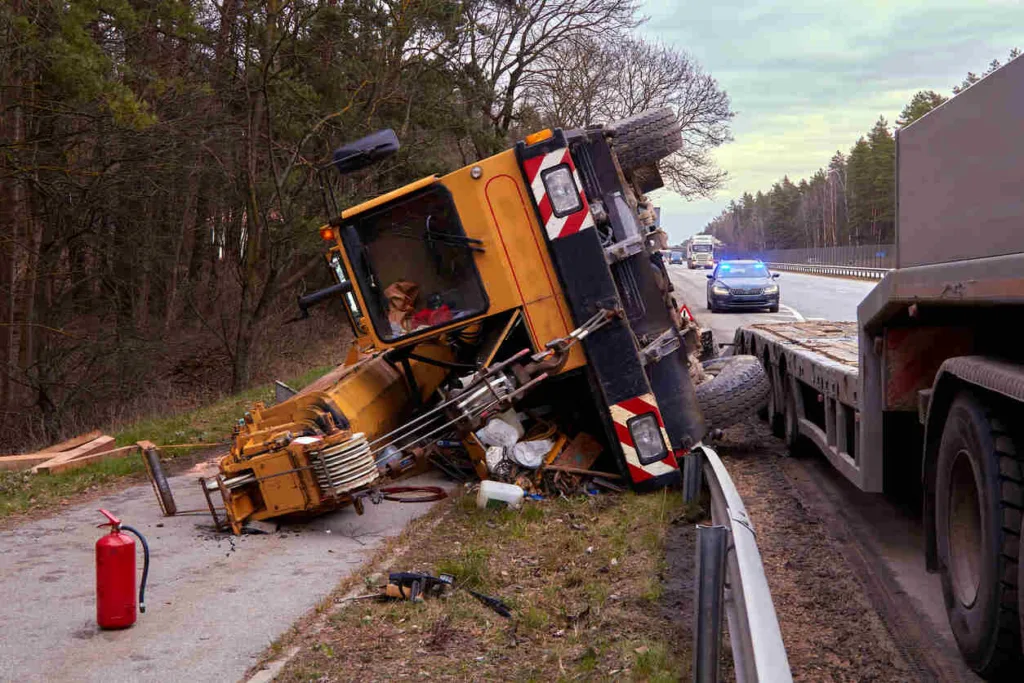
Heavy equipment and industrial machinery power many of Texas’s most important industries, including construction, oil and gas, manufacturing, and logistics. Cranes, forklifts, loaders, drilling rigs, conveyors, and other large machines are essential to completing work. They are also among the most dangerous tools on a job site. When something goes wrong, the injuries are often catastrophic.
At Hollingsworth Law Firm, our Houston personal injury attorneys represent individuals seriously injured in heavy equipment and machinery accidents across Texas. These cases are not limited to workers’ compensation claims. In many situations, injured workers and bystanders have the right to pursue personal injury lawsuits against employers, contractors, or other negligent parties.
Why Heavy Equipment Accidents Are So Severe
Heavy equipment accidents rarely result in minor injuries. The sheer size, weight, and power of industrial machinery mean that even a brief malfunction or operator error can cause devastating harm.
Common consequences include:
Crush injuries from equipment rollovers or collapses.
Traumatic brain injuries caused by falling objects or sudden impacts.
Spinal cord injuries resulting from falls or being pinned.
Amputations involving machinery with moving or rotating parts.
Internal organ damage from high-force impacts.
These injuries often require extensive medical treatment, long-term rehabilitation, and may permanently limit a person’s ability to work.
Common Causes of Heavy Equipment and Machinery Accidents
Most job-site equipment accidents are neither random nor unavoidable. They typically stem from preventable safety failures.
Common causes include:
Improper equipment maintenance or mechanical failure.
Inadequate training for operators or nearby workers.
Defective machinery or missing safety guards.
Unsafe job site layout or poor traffic control.
Overloaded or improperly used equipment.
Pressure to work faster or bypass safety procedures.
In many cases, responsibility extends beyond the individual operator to supervisors, contractors, equipment owners, or manufacturers.
Understanding Texas’s Unique Workers’ Compensation System
Texas is the only state where most private employers are not required to carry workers’ compensation insurance. This makes Texas unique and significantly impacts injury claims.
For most private employers, participation is optional. Employers who choose not to carry workers’ compensation coverage are known as non-subscribers.
What It Means When an Employer is a Non-Subscriber
Non-subscriber employers are still required to comply with specific notice and reporting requirements. More importantly, they do not receive the legal protections afforded to workers’ compensation.
When an employer is a non-subscriber:
Injured workers may file a personal injury lawsuit against the employer.
The employer loses certain legal defenses, including claims that the worker assumed the risk.
The employer may be held directly liable for unsafe working conditions.
Juries may consider the full scope of damages, including pain and suffering.
This system creates powerful legal rights for injured workers that do not exist in many other states.
Personal Injury Claims Beyond Workers’ Compensation
Even when workers’ compensation applies, injured workers may still have personal injury claims against third parties.
Third-party liability may involve:
Equipment manufacturers that produced defective machinery.
Maintenance companies that failed to service equipment properly.
General contractors or subcontractors who created unsafe site conditions.
Property owners who failed to address known hazards.
These third-party claims allow injured workers to pursue damages that workers’ compensation does not cover, including complete wage loss and non-economic damages.
Why These Cases Require Immediate Legal Action
After a serious job site injury, companies often move quickly to control the narrative. Equipment may be repaired, transferred, or removed. Witness statements may change. Critical records can disappear.
Early legal involvement helps:
Preserve physical and documentary evidence.
Identify all potentially liable parties.
Prevent improper pressure on injured workers.
Ensure injuries are fully documented.
Protect long-term financial recovery.
Heavy equipment cases are complex, and delay can severely weaken a claim.
How Hollingsworth Law Firm Helps After Job Site Equipment Accidents
At Hollingsworth Law Firm, we understand Texas job sites, industrial operations, and the legal complexities of non-subscriber and third-party injury claims. Our attorneys investigate not only how an accident occurred but also why it occurred.
We work to:
Identify employer non-subscriber status.
Investigate equipment defects and safety failures.
Hold contractors, manufacturers, and employers accountable.
Pursue compensation that reflects lifelong medical and financial needs.
Our focus is on protecting injured workers and their families from the consequences of preventable safety failures.
Contact Hollingsworth Law Firm Today
If you were seriously injured in a heavy equipment or machinery accident on a Texas job site, you may have legal options beyond workers’ compensation. Our attorneys at Hollingsworth Law Firm are prepared to review your case, explain your rights, and pursue accountability through the personal injury system.
Steve Hollingsworth is a seasoned trial attorney with extensive experience across Texas. After beginning his career as a felony prosecutor, Steve went on to represent major insurance companies before focusing on helping individuals injured in car, motorcycle, trucking accidents, and premises liability cases. Founder of his own firm, Steve is committed to providing personalized, client-focused legal representation to ensure justice for those he serves.
View Our Recent Cases
Confidential
Worker killed when he fell from height on a construction site.
CASE SETTLED
$1.3 MILLION
Man broadsided in an automobile accident when a lady ran a red light.
CASE SETTLED
$1.3 MILLION
Pedestrian was struck while walking by rideshare, suffered from multiple fractures.
CASE SETTLED
$882,500
Our client suffered severe arm injuries from a head on collision with a drunk driver.
CASE SETTLED
$715,000
Construction worker shattered his knee when he fell into an unmarked elevator shaft
JURY AWARDED $715,000
$500,000
Our client suffered from a gunshot to the abdomen caused by unsafe handling of firearms.
CASE SETTLED
$500,000
Our client and his family members were rear-ended by an 18-wheeler in Columbus, Texas.
CASE SETTLED
$450,000
Our client was struck by a commercial vehicle, causing severe damages to him and his car.
CASE SETTLED
$450,000
Our client was rear-ended by a negligent tow truck, causing injuries that necessitated a back surgery.
CASE SETTLED
$429,300
Workplace injury at grocery store, our client suffered from severe injuries from a fall.
CASE SETTLED
$360,000
Our client was struck on the driver’s side of the vehicle by a commercial truck, the negligent driver fled the scene after the accident.
CASE SETTLED
$350,000
Our client was rear-ended by another driver, causing damages to her neck, back, shoulders and leg.
CASE SETTLED
$304,341
Our client was rear ended by a negligent driver of a commercial vehicle.
CASE SETTLED
$300,000
Woman injured when a commercial truck sideswiped her.
CASE SETTLED
Confidential
Woman fell on wet floor at Wal-Mart and shattered knee cap.
CASE SETTLED
Confidential
Man injured when he was rear-ended by an oil field services truck.
CASE SETTLED
In Progress
Refinery worker received 3rd degree burns over approximately 30% of her body due to a flash fire at an oil refinery.
In Progress
Testimonials
Awesome Attorney
I was a client of Steve Hollingsworth. I was totally satisfied with his representation of me. He was very helpful in answering all my questions and always kept me updated on the status of my case. I am very happy with the settlement of the case and would highly recommend him to anyone looking for legal advice.
Rossana Former Client
Houston’s Best Consultation!
Steve was just great! Very easy to work with, communicates really well and most importantly sets realistic expectations. He is very straightforward and promptly responds to all your questions. I would definitely recommend Steve and would not hesitate to hire him in the future.
Anonymous Former Client
Very Accommodating and Caring
Steve and his assistant Kristina takes care of all my requests right away. Steve personally calls on issues and keeps me updated on the developments of the case. Got me a great settlement! Would highly recommend!
Mila G. Former Client
Rear End Case
Mr. Hollingsworth was an excellent lawyer in my case. He kept me up to date and informed through the whole process. He was always honest and fought hard in my case. He comes highly recommend.
Anonymous Former Client
Awesome!!!!!
I have no complaints; Steve did a very good job on explaining the details on everything that I was going through with my case. Steve got my case settled in no time, I will sure spread the word about Steve he is a very great lawyer.
Sara Former Client
Review
I liked how Steve explained everything, so I knew what I was getting in to. Steve got me what I deserved in no time. I would recommend him to anyone.
Andrew Former Client
Steven and I attended law school together and I have known him since 2000. He was stellar in representing a close friend with a personal injury matter. I have been very impressed with his communication, dedication and thoroughness in representation.
Pamela V. Attorney from Cypress, TX
Steve is the real deal! He is an extremely invaluable resource on all things Litigation for me as a younger attorney. He is not only great a securing the bigger verdicts, but actually cares about the clients and still sticks by his tried and true method of meeting, in person, with his clients to go over facts .
overall, a solid attorney, with a wealth of knowledge!
Crystal H. Attorney from Houston, TX
Steve and I were colleagues, where we worked on complex personal injury and wrongful death cases. What I observed in the years we worked together is that Steve is not only extremely skillful in his profession, but he is a tireless student of the law, constantly working to perfect the art of practicing law.
He genuinely cares about his clients and their cases and it shows. He has excellent work ethic. He is not only a terrific lawyer but also a great person. As a fellow member of the State Bar of Texas, I would recommend Steve to anyone needing a zealous advocate in a personal injury case.
Vivian E. Attorney from San Antonio, TX
After working with Steve for a couple of years, I found Steve to be an outstanding, aggressive and highly skilled lawyer in the courtroom. His confidence and knowledge of the courtroom and what it takes to succeed there, I believe will ensure his long term prosperity.
Robin T. Attorney from College Station, TX
I had the pleasure of working on a trial with Steven last August. His background as an ADA is clearly evident in the courtroom. Steven’s presentation of the evidence throughout trial is that of a seasoned attorney who has spent many hours in front of a jury.
His opening/closings were excellent, as well as his strategic litigating throughout the trial. Steven is a consummate professional and a pleasure to work with, and watch in the courtroom.
James H. From Miami, FL
When I met Steve, I was a legal assistant at a Plaintiff’s firm and he was working as an attorney for AIG. We connected there and then. Steve is a likable guy and an outstanding trial lawyer. He is charismatic and jurors like him.
He is a Plaintiff’s lawyer now and he has the right skill set to represent injured individuals: he is compassionate, honest, and sincere and will go the extra mile for his clients. I’ve known Steve for almost 8 years now and I’m excited to see his career evolve.
Alice L. Attorney in Houston, TX
Professional and Thorough
I used Steve Hollingsworth for a personal injury case following a car accident. He was very easy to work with and managed my expectations regarding costs, time commitment/duration, filing suit etc. Steve kept me informed during the process and always made sure I understand what everything meant.
My case took about 18 months to resolve, ending in mediation after filing suit and he pushed hard to make sure my best interest was represented and to ensure that I had the best possible (and fair) outcome.
I hope I never have a personal injury claim again but if I do, I would absolutely consult with Steve. He exceeded my expectations and made the process as painless as possible. I would high recommend him.
Jessie Former Client
About Hollingsworth Law Firm
Our aggressive personal injury trial attorneys at the Hollingsworth Law Firm are committed to fighting for the compensation you deserve. If you are the victim of an automobile accident, airplane accident, workplace injury or other catastrophic injury, you need legal advice from a personal injury attorney with proven results you can trust. Our dedicated legal team is proud to represent clients across the state of Texas. WE WILL START FIGHTING FOR YOUR RIGHTS TODAY!
When Employer Liability Applies to Distracted Driving Crashes in Texas
Comments:
Distracted driving remains one of the most common causes of serious vehicle crashes across Texas. Texting, navigation apps, work-related phone calls, and in-vehicle technology can all divert a driver’s attention…
What Crash Investigators Look for When Speed Is Suspected in Texas Accidents
Comments:
Speed is one of the most common factors in serious vehicle collisions across Texas. While excessive speed can dramatically increase the likelihood of severe injuries, proving that a driver was…
Catastrophic Leg Injuries in Texas Motorcycle Crashes: Long-Term Financial Impact
Comments:
Motorcycle crashes in Houston frequently result in severe lower-extremity injuries. Unlike occupants of passenger vehicles, riders have little structural protection between their bodies and the road. In high-impact collisions, the…