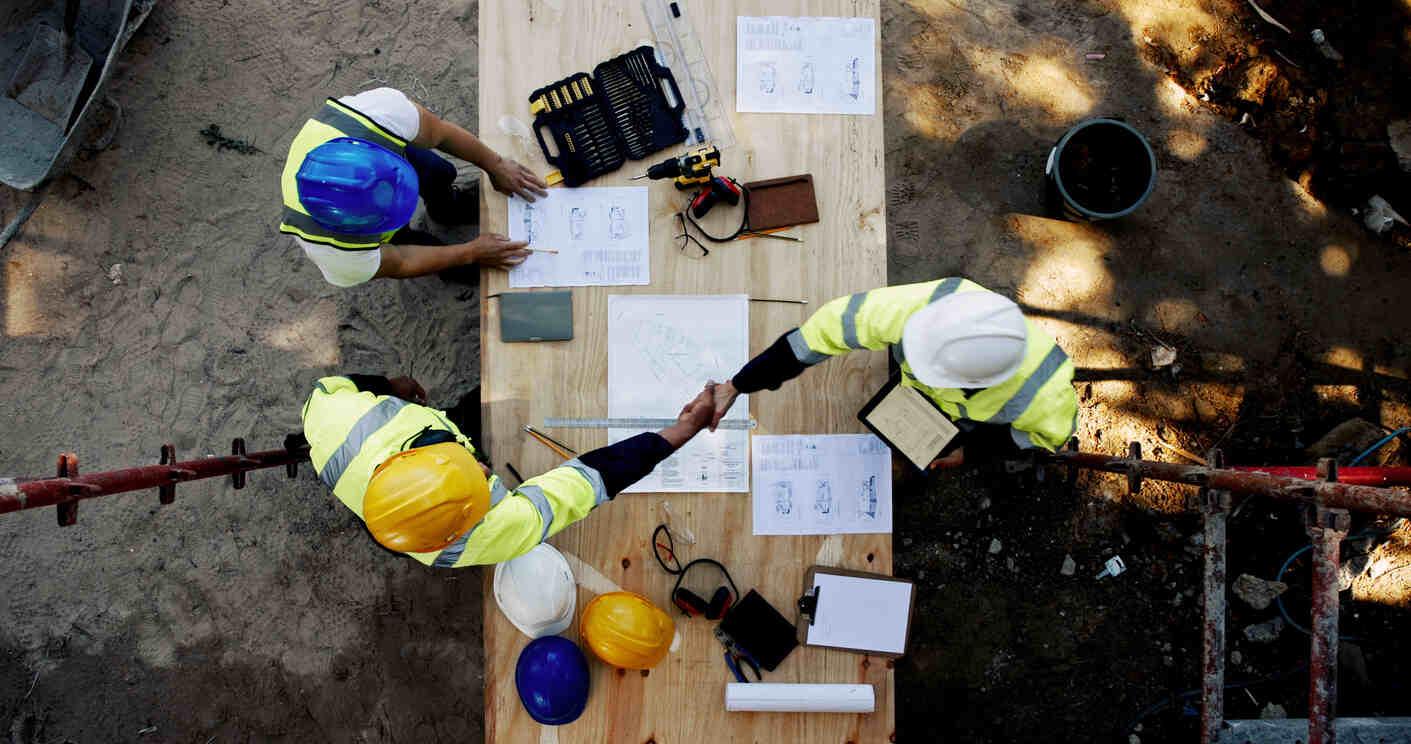
A single company rarely controls construction and industrial job sites across Houston. Multiple contractors, subcontractors, equipment suppliers, and site managers often operate simultaneously. When a serious injury occurs, many workers assume their only remedy is workers’ compensation through their employer.
In Texas, that assumption is not always correct.
While workers’ compensation may apply in some cases, the responsible party may actually be a third-party contractor whose negligence created unsafe conditions. Identifying that distinction can significantly affect the scope of financial recovery.
At Hollingsworth Law Firm, our Harris County personal injury attorneys regularly evaluate job site injury cases involving multiple contractors and layered liability.
How Multi-Contractor Job Sites Create Legal Complexity
Modern Texas job sites rarely operate under a single chain of command. Large construction projects, refinery turnarounds, energy infrastructure expansions, and industrial maintenance operations are structured around layered contracts and divided responsibilities.
Multiple companies may occupy the same physical space while performing entirely different scopes of work, each governed by separate agreements, insurance policies, and safety obligations.
Large construction, refinery, and industrial projects typically involve:
General contractors.
Subcontractors.
Independent contractors.
Equipment rental companies.
Property owners.
Engineering firms.
Safety supervisors.
Each entity may have separate responsibilities related to safety, supervision, and compliance with OSHA regulations. When a serious injury occurs, determining who controlled the work, who created the hazard, and who failed to correct it becomes critical.
Common Scenarios Where Contractors May Bear Liability
Contractor liability often arises when a separate company creates or controls a dangerous condition.
Examples include:
A subcontractor failing to secure heavy equipment.
A contractor removing safety guards from machinery.
Improper scaffolding installation.
Failure to follow site-wide safety protocols.
Electrical hazards created by an independent crew.
Crane operation errors.
Unsafe trenching or excavation practices.
If the contractor controlled the hazardous activity or failed to comply with safety standards, liability may extend beyond the employer.
Control and Responsibility on Texas Job Sites
Texas courts often examine who had the right to control the specific work that caused the injury.
Key questions include:
Who supervised the activity?
Who provided the equipment?
Who had the authority to enforce safety measures?
Who established the work procedures?
Who knew about the hazard?
Even if your employer was present, another contractor may have controlled the conditions that led to the injury. This distinction frequently determines whether a third-party lawsuit is viable.
Heavy Equipment and Machinery Accidents
Houston job sites often involve cranes, forklifts, excavators, and other large machinery.
When equipment is improperly maintained, defectively designed, or negligently operated, responsibility may fall on:
When contractors fail to communicate hazards or follow site safety rules, liability can extend beyond the injured worker’s employer.
OSHA Violations and Safety Failures
OSHA violations do not automatically establish liability, but they can provide important evidence in civil cases.
Common safety failures include:
Inadequate fall protection.
Failure to secure elevated work areas.
Lack of hazard warnings.
Missing protective barriers.
Inadequate supervision of dangerous operations.
If a contractor violated safety regulations and that violation contributed to the injury, it may strengthen a third-party claim.
Why Insurance Companies Resist Third-Party Claims
When catastrophic injuries occur, insurance carriers often attempt to limit exposure to workers’ compensation benefits. Third-party lawsuits significantly increase potential financial liability.
Common insurer strategies include:
Arguing that the employer retained full control.
Shifting blame to the injured worker.
Claiming shared responsibility between contractors.
Minimizing the severity of safety violations.
Attempting early settlement before liability is fully investigated.
Without a thorough investigation, critical evidence may be lost or overlooked.
The Importance of Early Evidence Preservation
Construction and industrial sites change quickly. Equipment is moved, repaired, or replaced. Witnesses relocate. Safety documentation can be altered or disappear.
Early investigation may involve:
Securing incident reports.
Obtaining safety manuals.
Reviewing contractor agreements.
Preserving surveillance footage.
Identifying all entities involved in the project.
Consulting engineering experts.
In multi-contractor cases, identifying responsible parties early is essential.
When Employers Do Not Carry Workers’ Compensation
Texas is unique in that some employers opt out of the workers’ compensation system. In those cases, injured workers may have the right to sue their employer directly.
However, even when workers’ compensation applies, third-party claims against contractors may still exist.
Understanding which framework applies requires careful legal evaluation.
How Hollingsworth Law Firm Approaches Job Site Injury Cases
At Hollingsworth Law Firm, we analyze job site injury cases beyond surface assumptions. We examine contractor agreements, control structures, and safety responsibilities to determine whether liability extends beyond the employer.
Our attorneys focus on:
Identifying all potentially responsible parties.
Investigating safety failures.
Evaluating OSHA compliance.
Assessing long-term medical and financial impact.
Challenging attempts to limit recovery to workers’ compensation.
In multi-contractor cases, accountability often requires looking beyond the most obvious defendant.
Contact Hollingsworth Law Firm For Help Today
If you were injured on a Texas job site, the responsible party may not be your employer. A contractor, subcontractor, or third-party entity may have created the unsafe condition that led to your injury.
The attorneys at Hollingsworth Law Firm can review your case, evaluate potential third-party liability, and explain your legal options under Texas law.
Steve Hollingsworth is a seasoned trial attorney with extensive experience across Texas. After beginning his career as a felony prosecutor, Steve went on to represent major insurance companies before focusing on helping individuals injured in car, motorcycle, trucking accidents, and premises liability cases. Founder of his own firm, Steve is committed to providing personalized, client-focused legal representation to ensure justice for those he serves.
View Our Recent Cases
Confidential
Worker killed when he fell from height on a construction site.
CASE SETTLED
$1.3 MILLION
Man broadsided in an automobile accident when a lady ran a red light.
CASE SETTLED
$1.3 MILLION
Pedestrian was struck while walking by rideshare, suffered from multiple fractures.
CASE SETTLED
$882,500
Our client suffered severe arm injuries from a head on collision with a drunk driver.
CASE SETTLED
$715,000
Construction worker shattered his knee when he fell into an unmarked elevator shaft
JURY AWARDED $715,000
$500,000
Our client suffered from a gunshot to the abdomen caused by unsafe handling of firearms.
CASE SETTLED
$500,000
Our client and his family members were rear-ended by an 18-wheeler in Columbus, Texas.
CASE SETTLED
$450,000
Our client was struck by a commercial vehicle, causing severe damages to him and his car.
CASE SETTLED
$450,000
Our client was rear-ended by a negligent tow truck, causing injuries that necessitated a back surgery.
CASE SETTLED
$429,300
Workplace injury at grocery store, our client suffered from severe injuries from a fall.
CASE SETTLED
$360,000
Our client was struck on the driver’s side of the vehicle by a commercial truck, the negligent driver fled the scene after the accident.
CASE SETTLED
$350,000
Our client was rear-ended by another driver, causing damages to her neck, back, shoulders and leg.
CASE SETTLED
$304,341
Our client was rear ended by a negligent driver of a commercial vehicle.
CASE SETTLED
$300,000
Woman injured when a commercial truck sideswiped her.
CASE SETTLED
Confidential
Woman fell on wet floor at Wal-Mart and shattered knee cap.
CASE SETTLED
Confidential
Man injured when he was rear-ended by an oil field services truck.
CASE SETTLED
In Progress
Refinery worker received 3rd degree burns over approximately 30% of her body due to a flash fire at an oil refinery.
In Progress
Testimonials
Awesome Attorney
I was a client of Steve Hollingsworth. I was totally satisfied with his representation of me. He was very helpful in answering all my questions and always kept me updated on the status of my case. I am very happy with the settlement of the case and would highly recommend him to anyone looking for legal advice.
Rossana Former Client
Houston’s Best Consultation!
Steve was just great! Very easy to work with, communicates really well and most importantly sets realistic expectations. He is very straightforward and promptly responds to all your questions. I would definitely recommend Steve and would not hesitate to hire him in the future.
Anonymous Former Client
Very Accommodating and Caring
Steve and his assistant Kristina takes care of all my requests right away. Steve personally calls on issues and keeps me updated on the developments of the case. Got me a great settlement! Would highly recommend!
Mila G. Former Client
Rear End Case
Mr. Hollingsworth was an excellent lawyer in my case. He kept me up to date and informed through the whole process. He was always honest and fought hard in my case. He comes highly recommend.
Anonymous Former Client
Awesome!!!!!
I have no complaints; Steve did a very good job on explaining the details on everything that I was going through with my case. Steve got my case settled in no time, I will sure spread the word about Steve he is a very great lawyer.
Sara Former Client
Review
I liked how Steve explained everything, so I knew what I was getting in to. Steve got me what I deserved in no time. I would recommend him to anyone.
Andrew Former Client
Steven and I attended law school together and I have known him since 2000. He was stellar in representing a close friend with a personal injury matter. I have been very impressed with his communication, dedication and thoroughness in representation.
Pamela V. Attorney from Cypress, TX
Steve is the real deal! He is an extremely invaluable resource on all things Litigation for me as a younger attorney. He is not only great a securing the bigger verdicts, but actually cares about the clients and still sticks by his tried and true method of meeting, in person, with his clients to go over facts .
overall, a solid attorney, with a wealth of knowledge!
Crystal H. Attorney from Houston, TX
Steve and I were colleagues, where we worked on complex personal injury and wrongful death cases. What I observed in the years we worked together is that Steve is not only extremely skillful in his profession, but he is a tireless student of the law, constantly working to perfect the art of practicing law.
He genuinely cares about his clients and their cases and it shows. He has excellent work ethic. He is not only a terrific lawyer but also a great person. As a fellow member of the State Bar of Texas, I would recommend Steve to anyone needing a zealous advocate in a personal injury case.
Vivian E. Attorney from San Antonio, TX
After working with Steve for a couple of years, I found Steve to be an outstanding, aggressive and highly skilled lawyer in the courtroom. His confidence and knowledge of the courtroom and what it takes to succeed there, I believe will ensure his long term prosperity.
Robin T. Attorney from College Station, TX
I had the pleasure of working on a trial with Steven last August. His background as an ADA is clearly evident in the courtroom. Steven’s presentation of the evidence throughout trial is that of a seasoned attorney who has spent many hours in front of a jury.
His opening/closings were excellent, as well as his strategic litigating throughout the trial. Steven is a consummate professional and a pleasure to work with, and watch in the courtroom.
James H. From Miami, FL
When I met Steve, I was a legal assistant at a Plaintiff’s firm and he was working as an attorney for AIG. We connected there and then. Steve is a likable guy and an outstanding trial lawyer. He is charismatic and jurors like him.
He is a Plaintiff’s lawyer now and he has the right skill set to represent injured individuals: he is compassionate, honest, and sincere and will go the extra mile for his clients. I’ve known Steve for almost 8 years now and I’m excited to see his career evolve.
Alice L. Attorney in Houston, TX
Professional and Thorough
I used Steve Hollingsworth for a personal injury case following a car accident. He was very easy to work with and managed my expectations regarding costs, time commitment/duration, filing suit etc. Steve kept me informed during the process and always made sure I understand what everything meant.
My case took about 18 months to resolve, ending in mediation after filing suit and he pushed hard to make sure my best interest was represented and to ensure that I had the best possible (and fair) outcome.
I hope I never have a personal injury claim again but if I do, I would absolutely consult with Steve. He exceeded my expectations and made the process as painless as possible. I would high recommend him.
Jessie Former Client
About Hollingsworth Law Firm
Our aggressive personal injury trial attorneys at the Hollingsworth Law Firm are committed to fighting for the compensation you deserve. If you are the victim of an automobile accident, airplane accident, workplace injury or other catastrophic injury, you need legal advice from a personal injury attorney with proven results you can trust. Our dedicated legal team is proud to represent clients across the state of Texas. WE WILL START FIGHTING FOR YOUR RIGHTS TODAY!
Why SUVs and Pickup Trucks Are More Likely to Roll Over in Texas Crashes
Comments:
Sport utility vehicles and pickup trucks are among the most common vehicles on Texas roads. Across Houston and throughout the state, drivers rely on these vehicles for work, family transportation,…
Why Overnight Highway Driving in Texas Often Leads to Severe Collisions
Comments:
Texas is one of the largest states in the country, and traveling across it often requires hours behind the wheel. A trip between major cities such as Houston, Dallas, San…
When Employer Liability Applies to Distracted Driving Crashes in Texas
Comments:
Distracted driving remains one of the most common causes of serious vehicle crashes across Texas. Texting, navigation apps, work-related phone calls, and in-vehicle technology can all divert a driver’s attention…